
The Indian Canvas #18: BIS deadlines keep moving, and small makers learn last
India's BIS certification deadlines moved twice in the last two weeks. Hand tools and aluminium cans slipped from 1 October to April 2027, and the electrical appliance deadline stayed. A New York startup just raised $15 million to track exactly this kind of change for manufacturers. I looked for the Indian version and found trackers already on sale, so this is not an empty lane. The open question is whether anyone connects a rule change to a specific product.
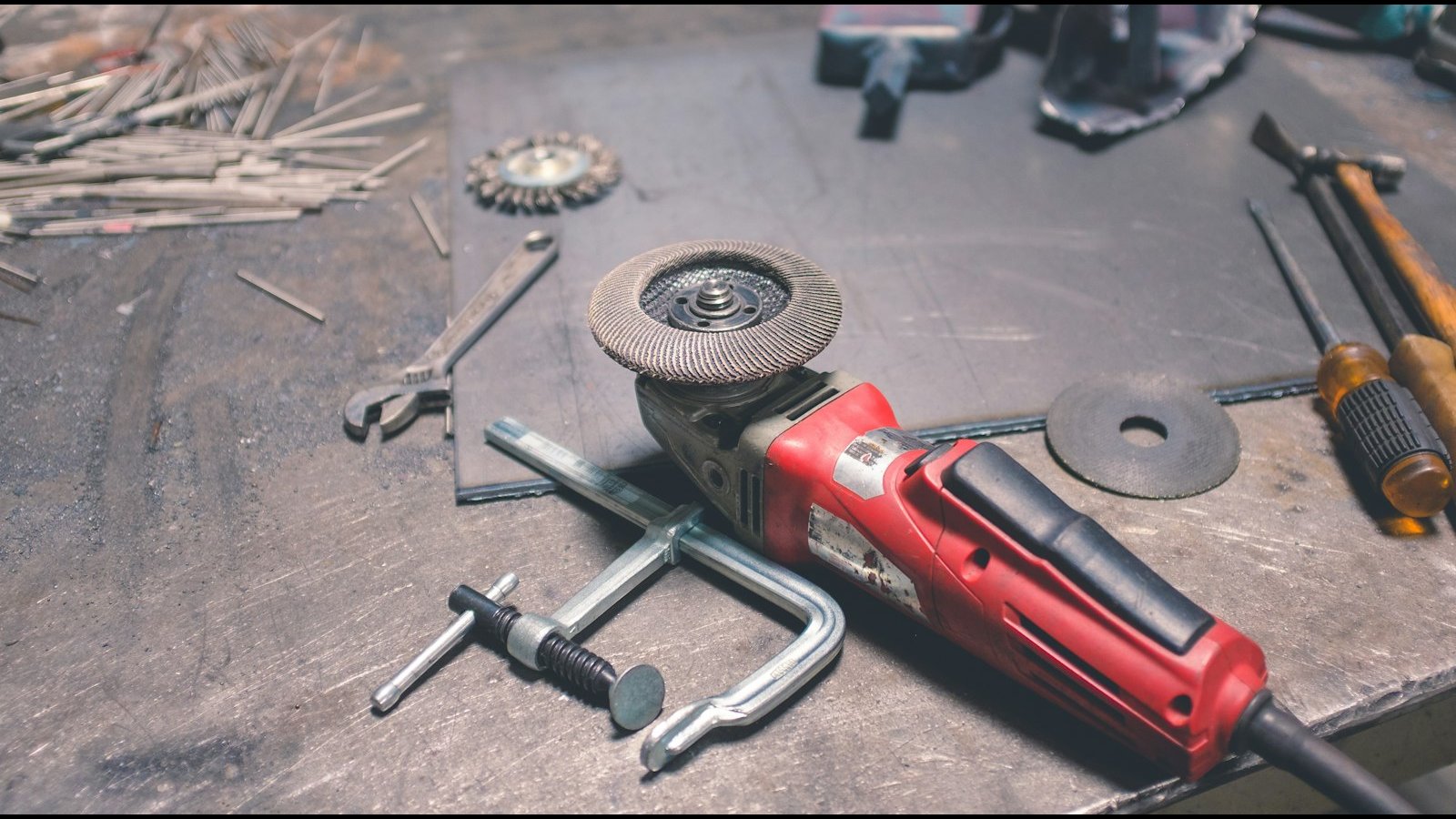
Stock workshop photo, not from any firm named here. An adjustable wrench is the kind of hand tool in the order discussed below.
Three orders, one date, then two changes
Three product orders were due to start on 1 October 2026. Only one still does. I read each at the official source or its Gazette text.
Electrical appliances. The Safety of Household, Commercial and Similar Electrical Appliances (Quality Control) Order, 2026 (S.O. 1739(E), 6 April 2026) is on the BIS site. It requires IS 302 (Part 1):2024 and the Standard Mark under a Scheme-I licence. The table gives 1 October 2026 in general, 1 January 2027 for small enterprises and 1 April 2027 for micro enterprises. Stock made or imported before the date can be sold for up to six months if the maker holds or has applied for certification and files a declaration with BIS.
Hand tools. The 2025 order, which I also read on the BIS site, covered nine tools from 1 October 2026. A replacement, the Hand Tools (Quality Control) Order, 2026 (S.O. 5561(E), 9 October 2026), moves the dates to 1 April 2027 in general, 1 July 2027 for small enterprises and 1 October 2027 for micro enterprises. I read that through Gazette Tracker's copy of the Gazette text, and BIS's own list of upcoming orders, last updated 15 October, shows 1 April 2027 for all nine.
Cookware, utensils and cans. A second order dated 13 October 2026 (S.O. 5624(E)) replaces the first. In the Gazette text, wrought aluminium utensils (IS 1660:2024) are covered with immediate effect. Aluminium beverage cans (IS 14407:2023) start on 1 April 2027 in general and 1 July 2027 for small firms. I could not read the micro date in the scan I opened; a Zeebiz report says 1 October 2027.
So the simple version, "three deadlines on 1 October", is out of date. A small manufacturer of electrical appliances has 74 days to 1 January, and a micro one has 164 days to 1 April. That is my arithmetic from 19 October. For tools and cans the clock is now much longer, and for utensils it has already run out.
Why the churn is the real cost
Writing in The Hindu on 24 September 2026, two CSEP-affiliated authors say products under quality control orders (QCOs) rose from 88 in 2019 to 765 by the end of December 2024, and that several QCOs, mostly on intermediate goods, were later revoked or suspended. They add that a Transition Facilitation Order was notified on 25 June 2026 and that more than 600 covered products remain to be reassessed.
The same piece summarises a CSEP study of chemical input QCOs. It is about firms that buy those chemicals, not firms that must certify their own product. Larger downstream firms saw a 9.6% rise in production and a 37% fall in gross value added. Smaller ones saw no significant change in production or value added and a 47.6% fall in profitability. The point I take is narrower than "rules hurt small firms": a small firm has fewer people to read each change, and the changes in October came within days.
What Daptic sells, as it tells it
Daptic announced on 1 October 2026 a $15 million Series A, led by Canvas Ventures (the firm's site now says Canvas Prime, formerly Canvas Ventures) with IA Ventures, 8VC and others, for a total of $22 million, per its own announcement. It calls the category product compliance lifecycle management: watch regulatory change, work out which rules touch which product, turn them into requirements, and keep a record of who decided what. It names manufacturers like Honda as the kind of buyer it wants; I did not find a statement that Honda is a customer. None of this is independently checked, and Daptic is built for engineers at large global manufacturers, not Indian MSMEs.
Indian trackers already exist
My first search for an Indian equivalent found more than I expected.
bischeck.in offers a free BIS checker, a lab directory and a cost calculator, and sells a Rs 999-a-month plan with QCO alerts on email and WhatsApp, a certification tracker and deadline reminders. Its about page says it monitors 152 QCOs and that notifications on file run to 20 June 2026. I read that page on 19 October, so it did not yet list the October changes above. The page may lag the product. CompliFind has a free BIS and QCO search with limited personalised alerts, and says it was updated in October 2026. Its list showed the March 2026 cookware order when I looked, and I did not find the 9 or 13 October orders. Krono Labs generates compliance documents for hardware teams across the EU, UK, US and India, priced per document. Praeco is a free circular search for RBI, SEBI, MCA and others, which is monitoring rather than product mapping. Corpseed is a services firm that sells the certification work itself. All of this is the vendors' own description.
What I did not find is a tool that takes one maker's product list and says "your pliers moved from October to April, your small-firm date is 1 July, and here is your licence status". That is a hypothesis from a short search, not a survey. A tracker may already do it behind a login.
The idea that is left, and how it could fail
The payer is the owner of a small or micro factory that makes a few products under QCOs, or the consultant who files for several of them. The missing piece, if it is missing, is a change notice written for the product: which order, which date for your enterprise size, what the new standard version is, and what stock you may still sell. The India adaptation is MSME size, because the order text gives different dates for general, small and micro units, and a plain WhatsApp message in the owner's language.
I would test a price of Rs 1,000 to Rs 3,000 a month. That is a guess, set against bischeck.in's Rs 999 and the cost of a single missed date. It fails if free sources and consultants keep owners informed well enough, if the dates keep changing and the tool has to be corrected by hand, or if owners will not pay for alerts when the licence wait and test fees are the real cost. A tool also cannot tell you that a rule will be delayed before the Gazette says so.
A test that would take a few weeks
Call 20 small makers of appliances and tools and ask one question: how did you find out that hand tools moved to April 2027? If most say "my consultant" or "I didn't know", try a manual weekly message to ten of them and see who asks for more. If most already have a clean answer, stop.
Sources and photo credits
Official texts: electrical appliances order, BIS; hand tools order of 2025, BIS; BIS upcoming QCOs list; hand tools order of 2026, Gazette text via Gazette Tracker; cookware second order, Gazette text. Reports: The Hindu, Zeebiz. Company claims: Daptic, bischeck.in pricing, CompliFind pricing, Krono Labs, Praeco. Photos, both on Unsplash with no stated location: cover, a white ceiling fan by Maxwell Ingham; top of article, tools on a workbench by Quilia. This is a research view, not legal advice or a proven business. Check the Gazette text for your own product code.
Responses
No responses yet - yours could be the first.
Get the notes
Occasional emails about what I'm building, what worked, and what broke.