
The Indian Canvas #06: Redditors doubted an Indian leftover-food app. Kerala and Hyderabad already have them. What would make a bakery pack trustworthy?
An aspiring founder asked r/IndianFood whether people would buy "surprise bags" of a bakery's leftover food. The most upvoted replies said no, mostly on trust. But the product exists in India already, in Kerala and Hyderabad. So the question I can ask is narrower: would a pack that names its contents and its bake time be trusted where a mystery bag is not, and would a bakery pay for the sale? I do not know yet. This is a watchlist idea.
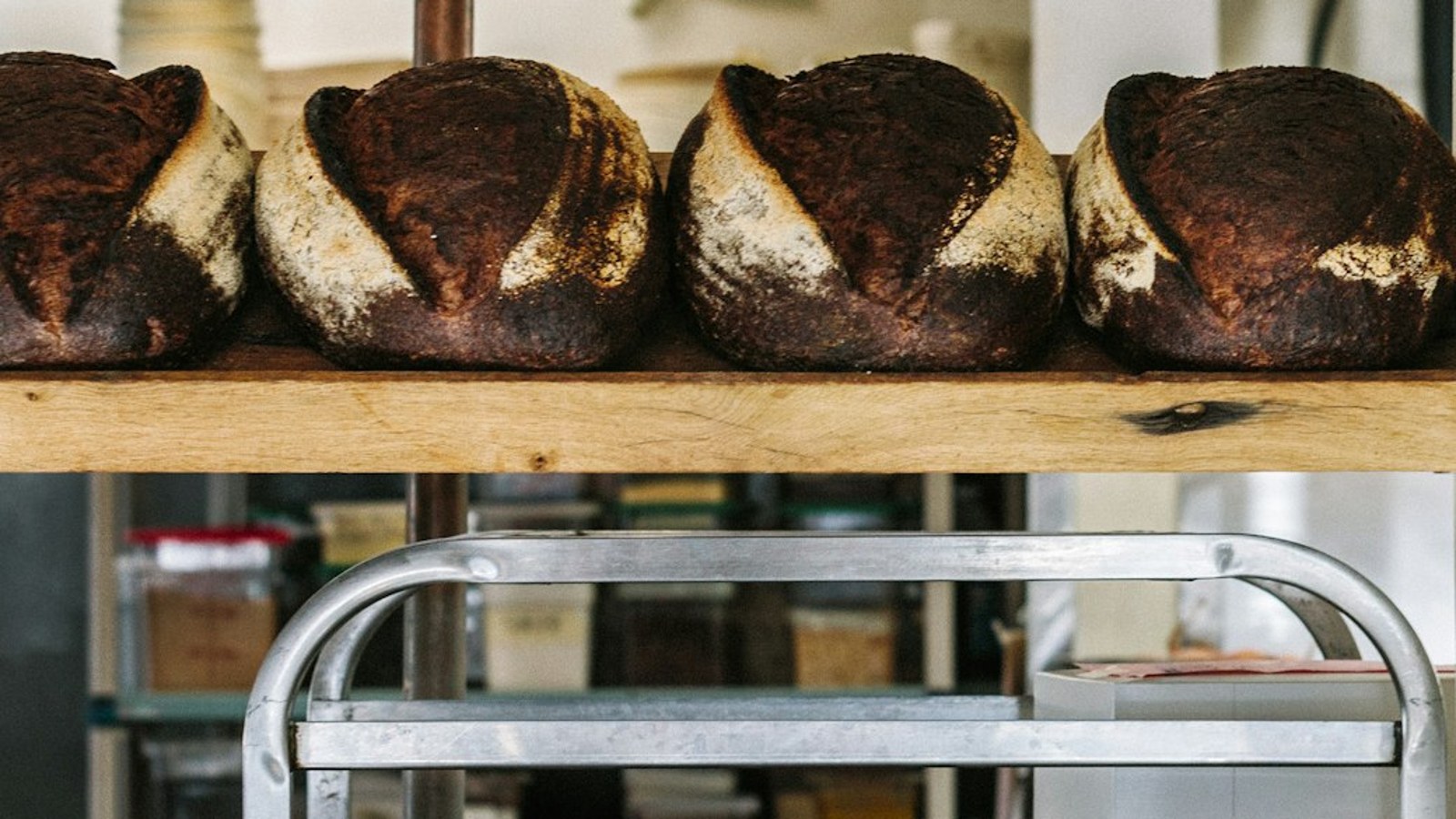
A bakery shelf. The photo is a stock image and not an Indian bakery.
"So basically like Too Good To Go?"
On 18 October 2025 a user posted in r/IndianFood that he was thinking of a site where bakeries, cafes and restaurants sell unsold same-day food as discounted surprise bags, starting with a pilot in a city like Chennai or Coimbatore. He said he was not from a tech background and would begin with a basic website. The thread has 13 points and 45 comments, and I could read 16. It is an idea-stage question. It has no pilot numbers in it.
The top reply, with 34 points, said it would not work well in India because food safety is not taken seriously and most places regularly sell expired food. Others said there would be no legal recourse after food poisoning, that restaurants would not want day-old food tied to their ratings, and that restaurants throw food away rather than donate it for fear of being sued. These are commenters' opinions and hearsay. I did not check any of the legal claims, and I do not treat them as fact.
The more useful comments were about design. Name the participating shops. Show whether the bag is vegetarian, non-vegetarian or contains egg, with allergy notes. Add ratings. One commenter who uses the app abroad said some bakeries gave stale two- or three-day-old items, and that some shops marked up the retail price and then offered a fake discount. That is one person's experience, but it points at what a trust layer would have to prevent.
The product already exists in India
Plenti calls itself India's first food surplus marketplace and sells Surprise Bags from restaurants, bakeries and stores at up to 70% off. Its home page lists five cities, all in Kerala: Trivandrum, Kochi, Kozhikode, Kollam and Thrissur. The same page's headline says it is live in 6 cities and trusted by 2.5 lakh users, and elsewhere it shows 90,000+ meals saved and says "500+ restaurants, bakeries and stores across India". I could not reconcile these numbers, so I treat all of them as marketing claims. It says joining is free with no commissions. Its partner testimonials are on its own site, for example a Kochi bakery saying it saved Rs 4,00,000 in a month and cut waste by 40%. That is Plenti's published quote and I could not verify it.
Good To Grab lists surplus food from cafes, bakeries and restaurants at a flat 50% off, with pickup in a set window. Its page names Hyderabad partners. I did not find its volumes.
So the market is not empty, and in at least one place the supply side has a rival offering free listings. A commission, which is the usual way to make money here, is hard to charge against that.
What Too Good To Go shows, and what it does not
The model I borrowed from is Too Good To Go. Its own about page says it was founded in Copenhagen in 2016 and now has 150 million registered users and 200,000 business partners in 20 countries, with more than 500 million meals saved, selling surplus at roughly a third of the original price. Those are company figures and describe scale. I did not see financial results, so I cannot say it is profitable, and I could not confirm it operates in India.
The lesson I take from it is about the mechanism: shops bag surplus at the end of the day and customers reserve and collect it through an app. The commenters' complaints, such as stale items and fake discounts, are about quality control on that mechanism, and they do not go away because the model has scale.
The narrower version I would test
The payers would be the buyer, per pack, and the bakery, either by a fee or by the extra sales. The missing piece, if there is one, is trust: a pack that lists what is in it, says whether it is vegetarian, and shows the bake time and a same-day cut-off. I have not checked whether Plenti or Good To Grab already show that detail inside their apps, so this is a hypothesis about a gap, not a finding. The India adaptation I would try is one dense neighbourhood and a handful of bakeries I can inspect myself, rather than another citywide surprise-bag marketplace.
These are test numbers and not observed economics. A Rs 150 pack with a 10% fee earns Rs 15, before support, refunds and payment costs. That can easily lose money. A fixed monthly fee from the bakery might work better, but bakeries on a free competitor may not pay it.
It can fail in several ways. A single food-safety incident ends it. Bakeries may prefer to sell the stock at a lower price to staff or to a regular buyer. Buyers may not return. And I have not researched the rules on reselling surplus food in India or on liability, so I would not start before someone who knows them has checked.
Fifty pickups
Pick three bakeries whose food licence I have seen, and one compact community. Run 50 paid pickups over two weeks with named contents and a stamped bake time. Continue only if buyers come back, stock can be traced to the same day, contribution is positive after refunds, and at least one bakery says it would pay. Stop on any safety failure.
Sources and photo credits
Thread: r/IndianFood, 18 October 2025 (a user's post and commenters' opinions, not verified). Companies, with their own claims: Plenti, Good To Grab, Too Good To Go. Photos, both on Unsplash and neither page stating a location: cover, fresh pastries and croissants on display by Phil Hearing; top of article, breads on a brown wooden shelf by Vladimir Kudinov. This is a research view, not a proven business.
Responses
No responses yet - yours could be the first.
Get the notes
Occasional emails about what I'm building, what worked, and what broke.